


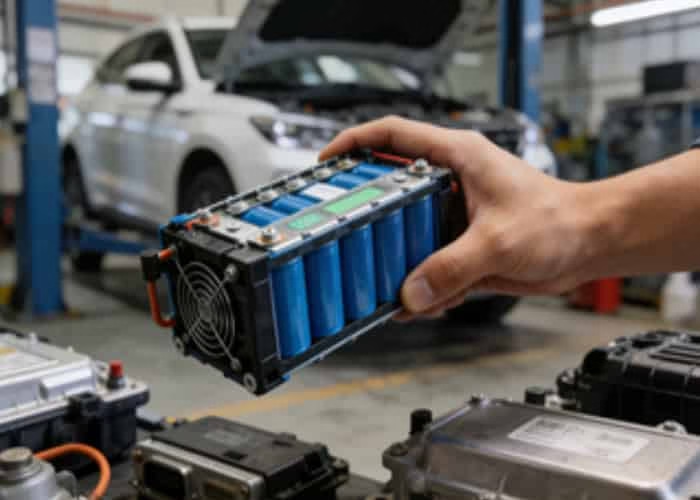
How does the thermal management system for power batteries ensure the safe operation of new energy vehicles? The thermal management system for power batteries serves as the core safeguard for the safe operation of new energy vehicles. Through precise temperature control and multi-dimensional protection mechanisms, it ensures the battery remains in a safe and efficient operational state throughout its entire lifecycle.
The thermal management system maintains the optimal operating temperature range for the battery pack through real-time monitoring and dynamic adjustment. Power batteries are highly sensitive to temperature: high temperatures accelerate electrolyte decomposition, triggering internal short circuits; while low temperatures increase electrolyte viscosity, significantly raising internal resistance and drastically reducing charge/discharge efficiency.
Employing technologies like liquid cooling, air cooling, or phase-change materials, the thermal management system rapidly dissipates heat during high temperatures and elevates temperatures using heating films or heat pump technology during low temperatures, ensuring the battery consistently operates within an optimal range. This temperature control not only enhances charge/discharge efficiency but also prevents performance degradation or thermal runaway risks caused by abnormal temperatures.
Safety protection under extreme conditions represents another core function of thermal management systems. During fast charging, the battery’s heat generation rate surges dramatically, where localized overheating could trigger chain reactions. The thermal management system disperses heat evenly to prevent hotspot formation by optimizing cooling channel design, increasing heat dissipation surface area, or employing dual-sided cooling technology.
Fault warning and proactive intervention mechanisms further fortify safety defenses. Integrating multi-level temperature sensors and intelligent algorithms, the thermal management system continuously analyzes battery temperature trends. Upon detecting abnormal temperature spikes or excessive thermal gradients, the system immediately triggers alerts to nip risks in the bud.
How does the thermal management system ensure the safe operation of new energy vehicles? By reducing thermal stress damage to battery materials, the thermal management system significantly extends battery lifespan. During repeated charge-discharge cycles, temperature fluctuations accelerate the thickening of the solid electrolyte interphase (SEI) film, leading to irreversible capacity degradation.





Leave a Reply