


Under the carbon neutrality goal, the new energy vehicle industry is ushering in a new round of technological revolution and industrial transformation. Future development will exhibit the following important trends:
I. Technological Breakthroughs and Innovation Trends
1. Battery Technology Revolution
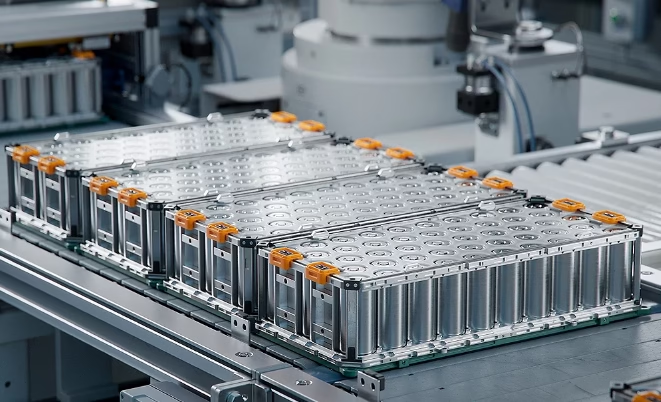
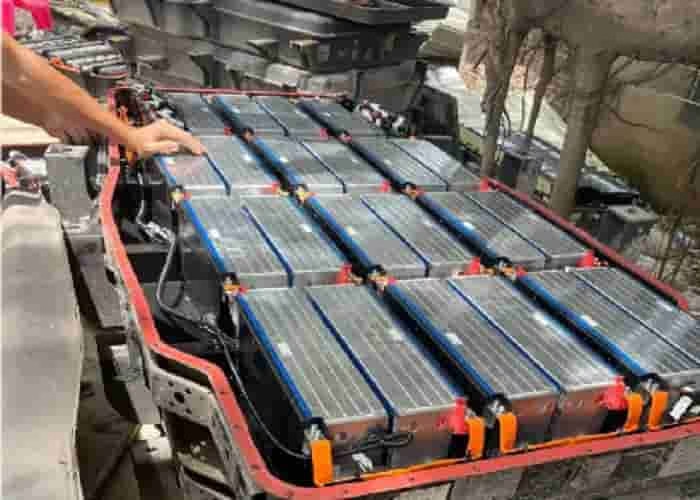
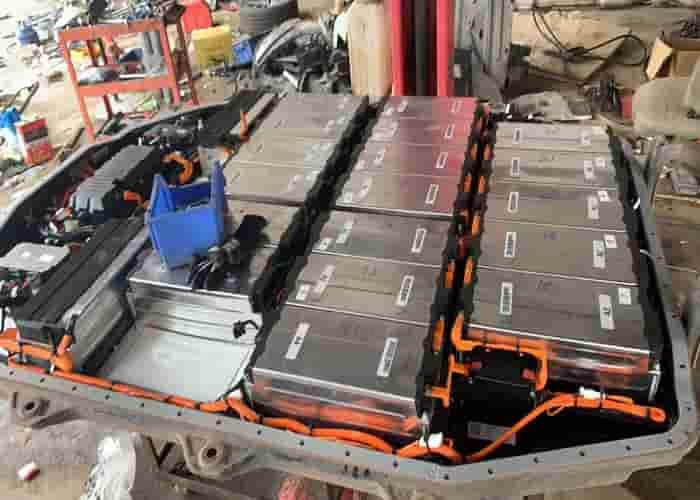
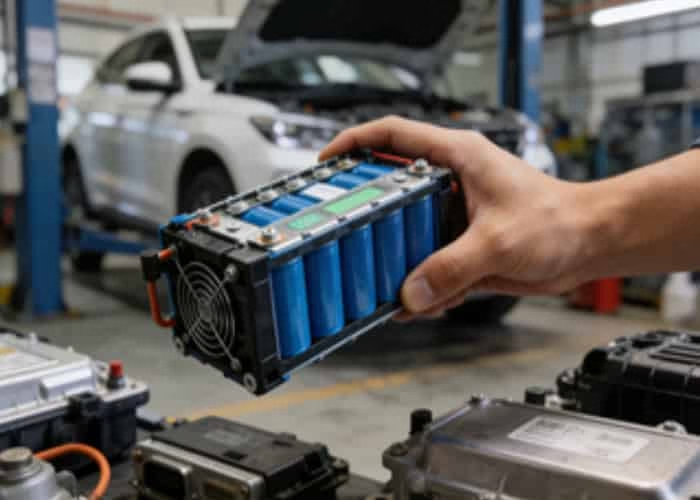
Solid-state battery technology breakthroughs will become the core driving force of the industry. All-solid-state batteries have significant advantages in energy density, safety, and cycle life, with energy densities exceeding 350Wh/kg and cycle life exceeding 2000 cycles, representing a qualitative leap compared to traditional lithium-ion batteries. Leading companies such as CATL and BYD are accelerating their mass production deployment, while automakers like Changan Automobile plan to achieve mass production of all-solid-state batteries by 2027.
2. Fast Charging Technology Upgrade
Charging technology is developing towards ultra-fast charging, with fast charging technology capable of charging 80% in 15 minutes already in mass production. Liquid-cooled charging technology is gradually becoming widespread, supporting charging power up to 350kW, significantly shortening charging time.
II. Integration of Intelligentization and Connectivity
1. Widespread Adoption of High-Level Autonomous Driving
Level 2 and above intelligent connected vehicles will be widely adopted. By 2030, Level 2 and above intelligent connected passenger vehicles will be widely used in new cars, and the market penetration rate of Level 2 and above intelligent connected commercial vehicles will exceed 50%. The Ministry of Industry and Information Technology has clearly stated that it has conditionally approved the production access of Level 3 vehicles, with the first batch of pilot projects covering 7 cities.
2. Integrated Development of “Vehicle, Energy, Road, and Cloud”
New energy vehicles will be deeply integrated with energy, transportation, and the Internet, building an integrated industrial ecosystem of “vehicle, energy, road, and cloud.” Through the synergy between vehicles and infrastructure, a highly prosperous intelligent connected service ecosystem will be achieved, deeply integrating into social life and economic operation.
III. Market Structure and Penetration Rate Increase
1. Continuously Rising Penetration Rate
The penetration rate of new energy vehicles has exceeded 50%, and is expected to reach 60% by 2030 and exceed 80% by 2040. Based on an average annual increase of 20 million vehicles, China’s total vehicle ownership will reach 479 million by 2030, of which new energy vehicles will exceed 100 million.
2. Accelerated Electrification of Commercial Vehicles
The electrification of commercial vehicles will accelerate significantly, with a penetration rate exceeding 30% by 2030. The penetration rate of new energy vehicles in medium and heavy-duty trucks will exceed 35%, and in light trucks, it will exceed 33%. Hydrogen fuel cell technology will be rapidly implemented in commercial vehicles.
IV. Industry Chain and Ecosystem Development
1. Improved Charging Infrastructure
The construction of charging infrastructure is accelerating. By the end of 2024, the total number of charging infrastructure units nationwide had reached 12.818 million, a year-on-year increase of 49.1%. Approximately 38,000 charging piles have been built in highway service areas, covering 98% of service areas nationwide.
2. Accelerated International Development
China’s new energy vehicle exports continue to grow, reaching 1.284 million units in 2024. Chinese brands are projected to achieve a market share of approximately 15% overseas, with overseas sales expected to reach around 8 million vehicles by 2030.
V. Policy Support and Standards System
1. Continued Policy Support: The purchase tax exemption policy for new energy vehicles has been extended to the end of 2027, bringing the total amount of tax reductions from 2024 to 2027 to 520 billion yuan. The government continues to introduce supportive policies, including financial subsidies, tax incentives, and the construction of charging infrastructure.
2. Improved Standards System: Accelerating the development of standards related to intelligent connected vehicles, promoting pilot applications of “vehicle-road-cloud integration,” improving the standardization of charging interfaces, and promoting the standardized development of the industry.
3. Future Outlook: By 2040, Level 4 autonomous driving will be fully implemented in new intelligent connected vehicles, and Level 5 intelligent connected vehicles will begin to enter the market. The new energy vehicle industry will develop from electrification as a foundation to intelligence, connectivity, and sharing, ultimately achieving a comprehensive electrification transformation of the automotive industry and making a significant contribution to the global carbon neutrality goal. These development trends indicate that the new energy vehicle industry is shifting from policy-driven to market-driven, with technological innovation and industrial integration becoming the core driving forces for future development, bringing unprecedented development opportunities to the industry.





Leave a Reply