


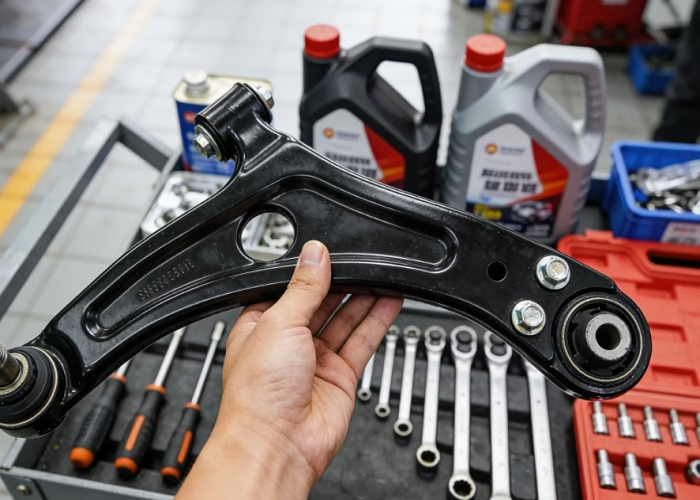
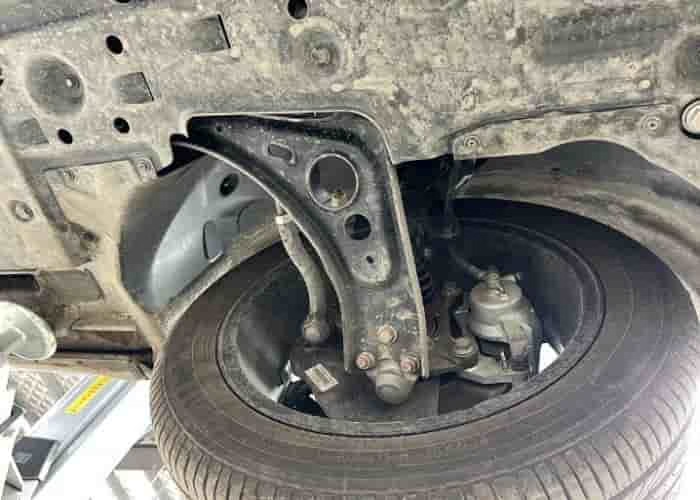
How Much Does the Suspension Control Arm Affect Handling in New Energy Vehicles? As a core component of the suspension system in new energy vehicles, the suspension control arm profoundly and multidimensionally influences vehicle handling performance, its role permeating every dynamic aspect of driving.
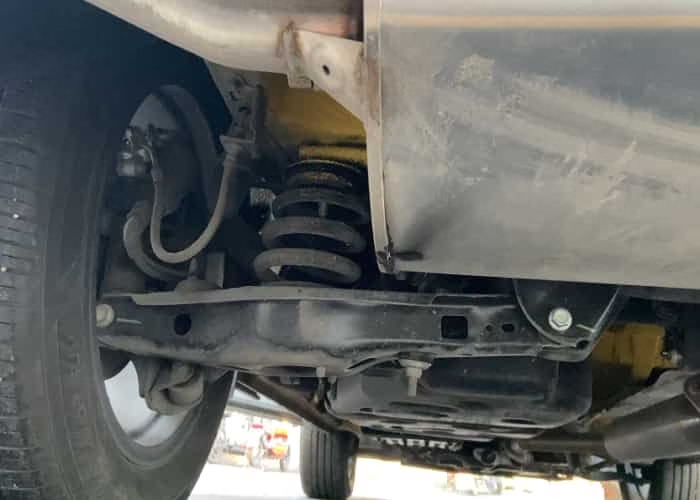
The primary function of suspension control arms is to support the vehicle body and precisely position the wheels. During cornering, control arms regulate camber and toe angles to maximize tire contact with the road surface. Insufficient arm rigidity allows wheels to tilt outward under centrifugal force, potentially causing tire skidding or loss of control.
During straight-line driving, the stiffness of suspension control arms remains critical. When accelerating or braking, the body experiences “pitching” or “nose-diving” due to inertia, which not only compromises ride comfort but also reduces tire-to-road adhesion.
Control arms counteract these unwanted body movements by transmitting longitudinal torque, ensuring efficient transfer of power or braking force to the road surface. If the control arm design is flawed, front-end dive during acceleration compresses the front suspension, causing understeer.
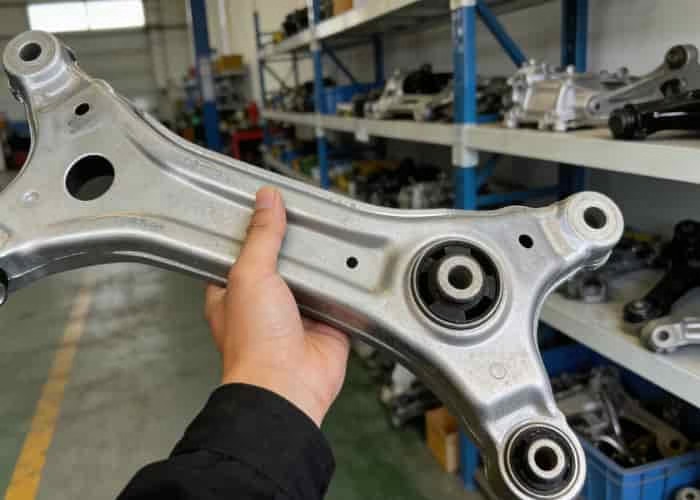
The material and lightweight design of suspension control arms also significantly impact handling responsiveness. While traditional steel control arms are cost-effective, their substantial weight reduces suspension system responsiveness. In contrast, aluminum alloy or carbon fiber composite materials ensure strength while reducing unsprung mass.
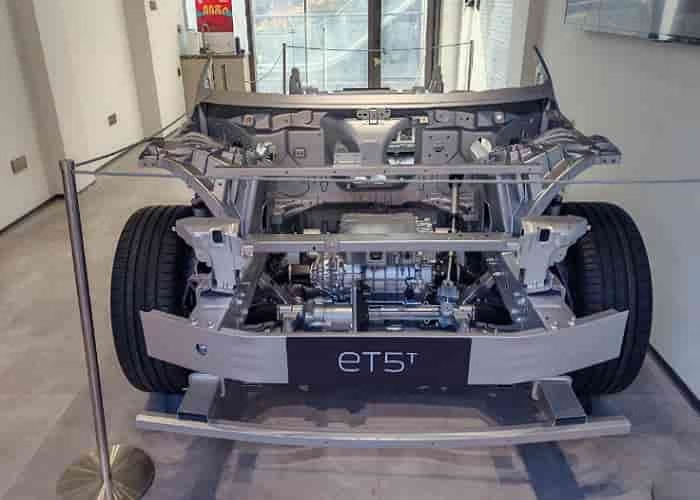
How significantly do suspension control arms affect handling in new energy vehicles? The compatibility between control arms and the overall suspension system is equally critical. Independent suspensions achieve decoupling between wheels through the independent movement of control arms. In contrast, control arms for non-independent suspensions must balance cost and performance, requiring design compromises between ride comfort and handling dynamics.


Leave a Reply