


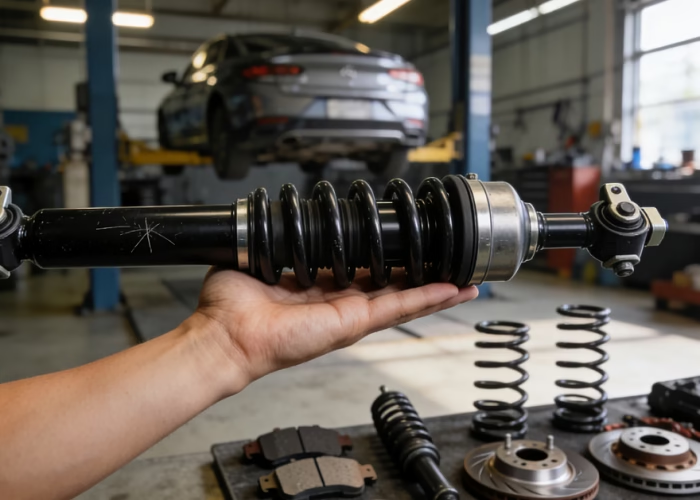
Shock Absorbers in New Energy Vehicles: Why They Determine Your Driving Comfort?Shock absorbers in new energy vehicles become the core determinant of driving comfort due to their unique position as the “nerve center” of the suspension system.
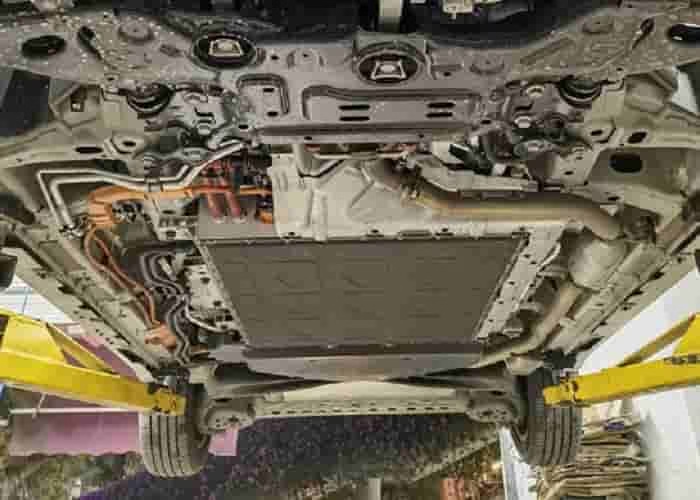
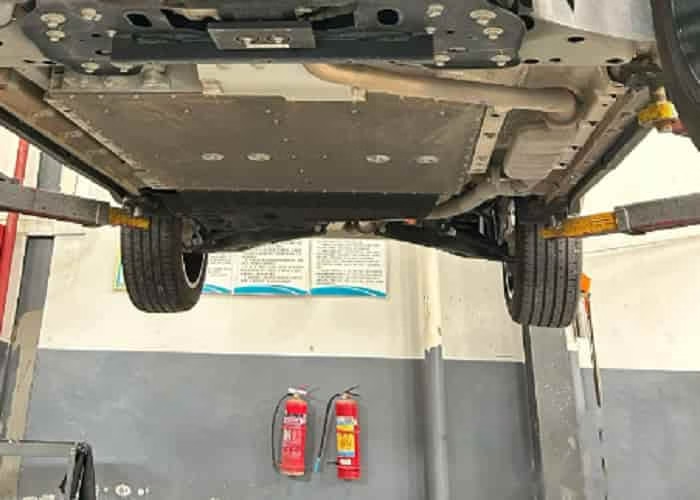
When traversing bumpy roads, shock absorbers convert road impacts into gentle cushioning through precise mechanical and hydraulic coordination. While traditional fuel-powered vehicles rely on fixed damping designs, new energy vehicles demand higher dynamic responsiveness due to the unique weight distribution of their batteries.
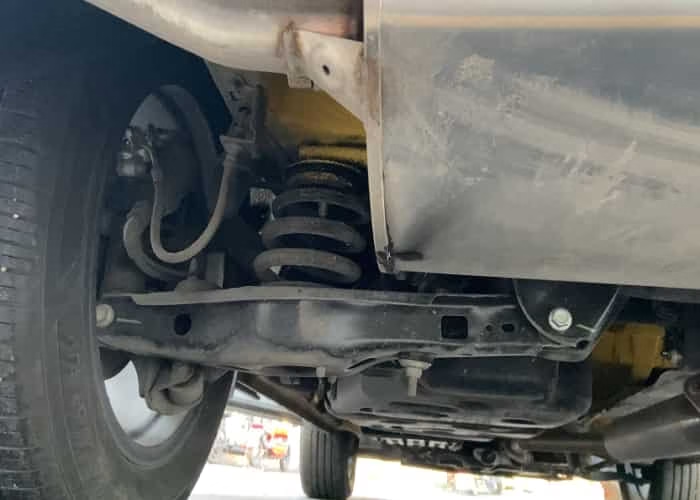
When wheels encounter bumps, springs absorb impact energy, while shock absorbers dissipate this energy as heat through the piston’s reciprocating motion within hydraulic fluid. The design of the damping orifice is critical in this process: an overly large aperture causes energy to dissipate too rapidly, resulting in excessive body bounce.
New energy vehicle shock absorbers often employ multi-stage damping valve systems that automatically adjust their opening based on vibration frequency. For instance, they provide low damping during high-frequency, fine vibrations to maintain smooth damping, while increasing damping during low-frequency, large vibrations to suppress body sway.
Innovations in materials and structure further amplify the shock absorber’s impact on ride comfort. To counteract the increased unsprung mass from battery packs, designs reduce inertia while maintaining structural integrity, enabling quicker shock absorber response. Oil-gas separation technology employs independent air chambers and oil reservoirs to ensure consistent support throughout the entire stroke.
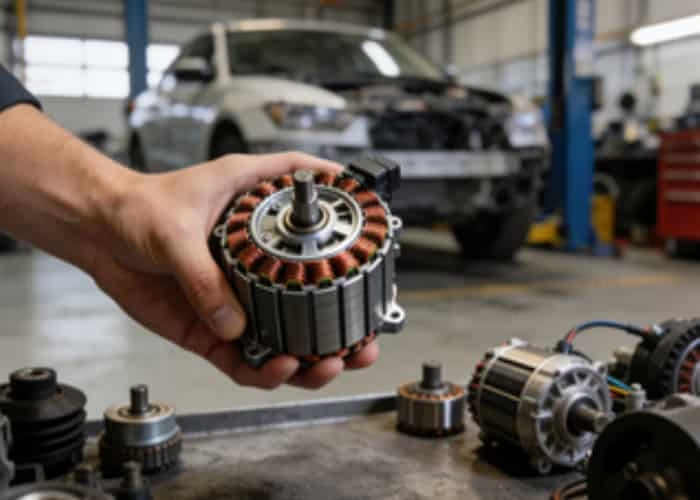
Coordinated tuning between shock absorbers and the entire vehicle system is equally crucial. The electric drive system in new energy vehicles enables active suspension technology. Some models utilize motors to monitor road conditions in real time, preemptively adjusting shock absorber damping to achieve predictive damping that “prevents vibrations before they occur.”
New Energy Vehicle Shock Absorbers: Why They Determine Your Driving Comfort? From a passenger’s perspective, the quality of shock absorbers directly manifests in the detail of “whether one experiences motion sickness.” Inferior shock absorbers can cause gastrointestinal discomfort during continuous bumps, while superior ones filter vibrations into smooth, even undulations—much like the steady ride of an elevator.



Leave a Reply