


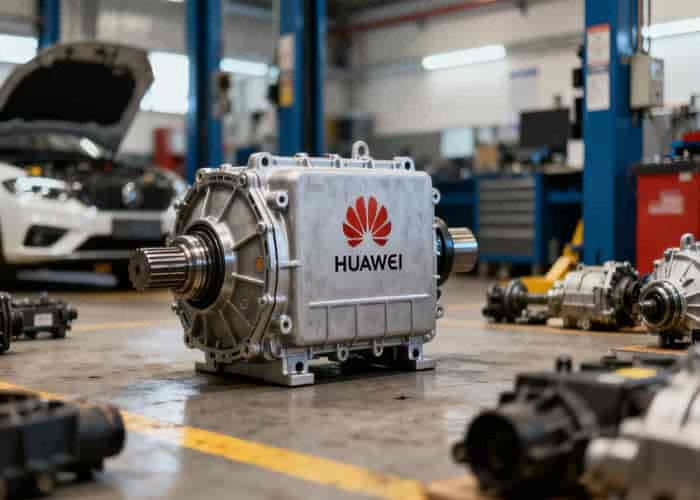
How does Huawei’s Intelligent Torque Control System work? This advanced technology is specifically designed to enhance vehicle dynamic performance and driving experience. Its core lies in achieving dynamic adaptive torque distribution through real-time sensing, rapid computation, and precise adjustment.
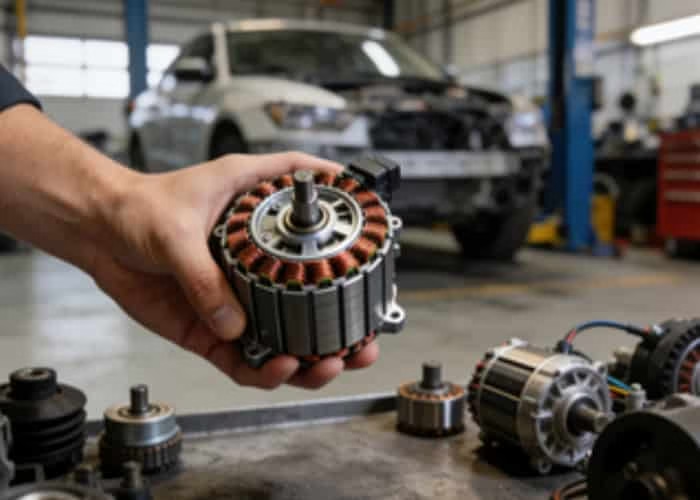
The system relies on high-precision sensors to continuously gather road surface information and vehicle status. For instance, it captures wheel speed variations via motor resolver sensors while monitoring yaw rate and lateral acceleration through body posture sensors, enabling precise identification of current driving conditions.
The computational phase serves as the system’s “brain,” performing millisecond-level strategy calculations based on perception data and predefined algorithmic models. The system comprehensively analyzes factors like road surface friction coefficients and vehicle motion trends to determine whether torque distribution adjustments are necessary. The system then optimizes front and rear axle power output through torque vectoring control, enhancing steering responsiveness.
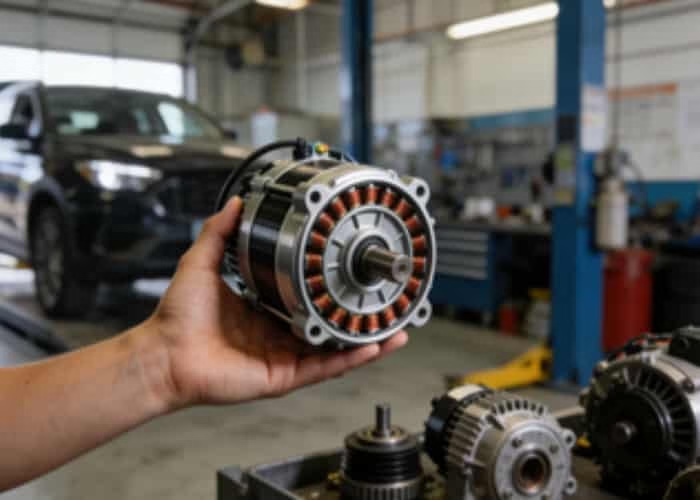
The adjustment phase is critical for translating computational results into physical actions. Through coordinated operation between motor controllers and the vehicle domain controller, the system rapidly modifies output torque across all drive motors. This adjustment extends beyond front-rear torque distribution to enable independent torque regulation for individual wheels.
On slippery surfaces, the system directs more torque to wheels with higher traction to suppress wheelspin. During high-speed cornering, it increases torque to the outer wheel while reducing torque to the inner wheel, enabling smoother steering transitions.
When traversing consecutive speed bumps, the system dynamically adjusts torque output for subsequent wheels based on feedback from the first pass, further reducing jarring impacts. During prolonged wet driving, it prevents changes in traction coefficients caused by temperature variations or wear from affecting control effectiveness.
How does Huawei’s Intelligent Torque Control System work? Its advantage lies in its “proactive intelligence.” Unlike traditional systems that react passively to wheel slip or vehicle instability, it anticipates risks and intervenes proactively, enhancing stability and safety through more precise torque adjustments.


Leave a Reply