


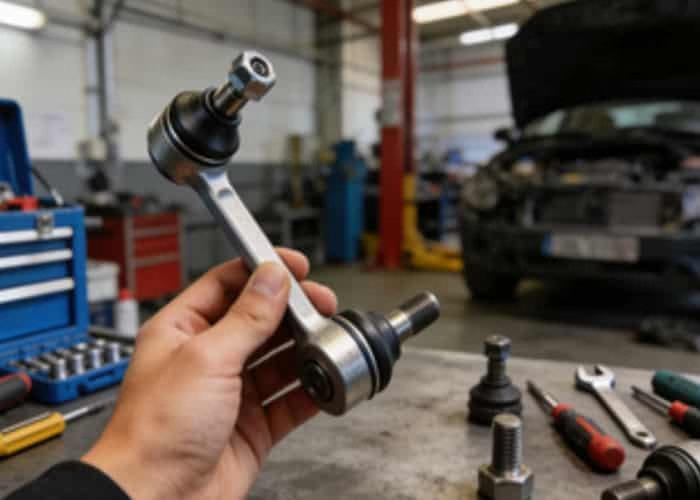
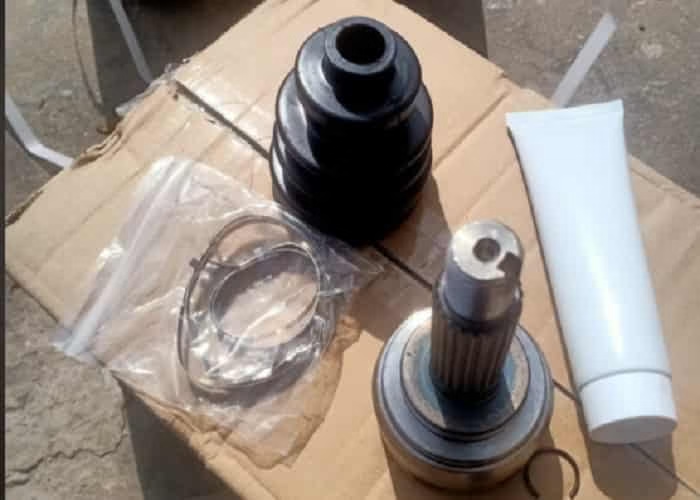
The core structure of the tie rod ball joint consists of a ball joint, dust cover, and clamp. The ball joint’s spherical design allows free rotation and tilt in three dimensions, making it an ideal transmitter of steering force. When the driver turns the steering wheel, the ball joint rotates flexibly within its socket, driving the steering knuckle and wheels to turn as intended.
The advantages of the tie rod ball joint become even more evident in complex road conditions. When traversing bumpy roads or encountering uneven surfaces where wheels encounter different heights, the stabilizer bar generates anti-roll resistance through shaft torsion, suppressing body roll. As the connection point between the stabilizer bar and suspension system, the ball joint cushions road impacts, preventing vibrations from directly transmitting to the steering wheel.
The ball socket employs wear-resistant materials combined with a needle-bearing design, significantly reducing friction during rotation and extending service life. The dust boot’s seal prevents grease drying and metal corrosion, ensuring long-term lubrication. If the dust boot is damaged, dust intrusion accelerates ball joint wear, severely compromising steering safety.
Tie rod ends also indirectly impact tire life and driving safety. Loose ball joints may cause wheel alignment parameters to shift, leading to abnormal tire wear or brake pull. In extreme cases, a detached ball joint could potentially cause a wheel detachment accident.
New Energy Vehicle Tie Rod Ball Joints: Why They Are the “Secret Weapon” for Agile Steering? The steering agility of new energy vehicles stems precisely from the comprehensive advantages of tie rod ball joints in structural design, material application, and functional integration. This ensures a stable, comfortable, and safe handling experience for every journey.


Leave a Reply