


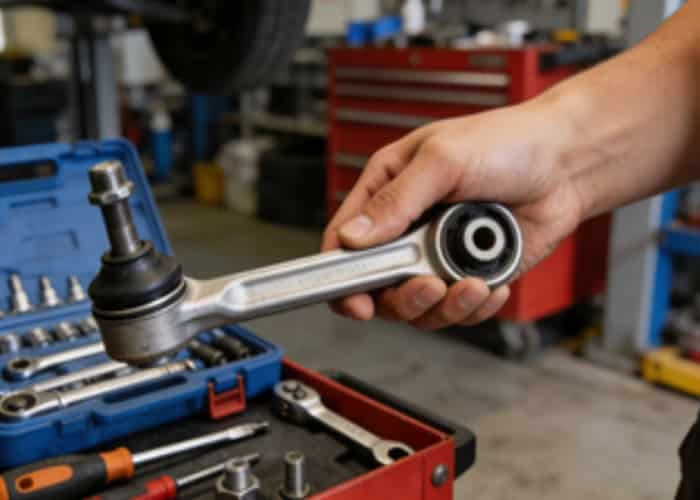
What exactly does the stabilizer bar do? Is it the key to smooth cornering in new energy vehicles? As a core component of the automotive chassis system, the stabilizer bar acts like an invisible “balance master,” quietly playing a crucial role during vehicle operation.
When one side of the suspension compresses under cornering forces, the stabilizer bar generates counteracting forces through its own torsion. This transfers part of the load to the opposite wheel, balancing the forces on both sides of the suspension. This process resembles an experienced dancer maintaining grace and stability.
For new energy vehicles, the stabilizer bar‘s role becomes even more pronounced. The weight distribution of the battery pack differs from that of traditional fuel-powered vehicles, shifting the vehicle’s center of gravity and affecting body posture during cornering.
By precisely aligning with the vehicle’s center of gravity, the stabilizer bar effectively suppresses body roll during high-speed driving or sudden lane changes, allowing drivers to maintain control with greater composure. It minimizes changes in tire camber during turns, ensuring maximum tire-to-road contact area and delivering enhanced traction and braking performance.
The chassis stabilizer bar also excels when navigating bumpy roads. When one wheel encounters a pothole or bump, the stabilizer bar, connecting both sides of the suspension, induces slight movement in the opposite wheel. This prevents excessive body sway caused by unilateral stress.
Stabilizer bar design is not fixed. Engineers meticulously tune parameters like stiffness and length based on a vehicle’s positioning, intended use, and driver expectations. Sportier vehicles may employ thicker bars to enhance handling limits, while comfort-oriented models opt for softer settings to prioritize ride quality.
What role does the stabilizer bar play? Is it crucial for smooth cornering in new energy vehicles? The stabilizer bar’s function remains indispensable. During emergency maneuvers or high-speed driving, it helps maintain stable body posture, reducing the risk of loss of control caused by excessive body roll.






Leave a Reply