


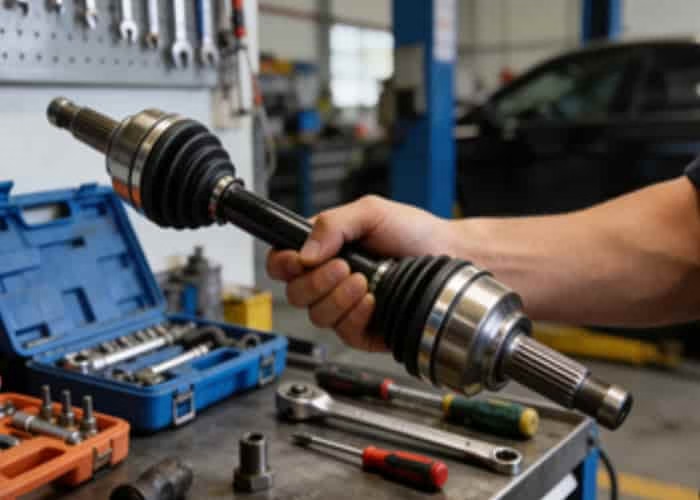
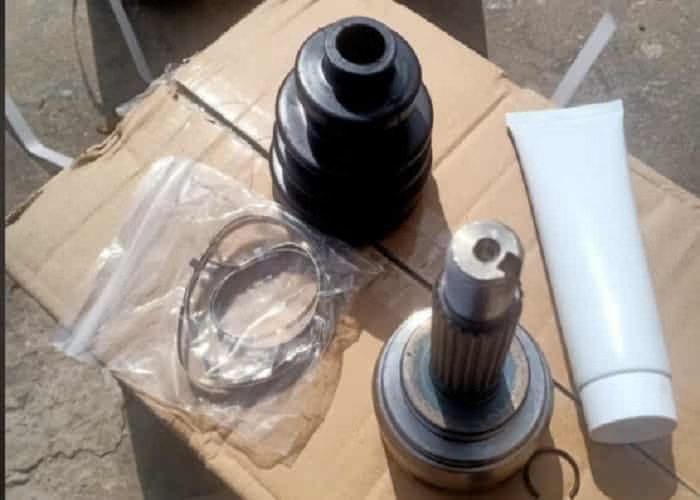
What happens when a half shaft in a new energy vehicle fails? As the core transmission component connecting the differential to the drive wheels, the condition of a new energy vehicle’s half shaft directly impacts power delivery, handling stability, and driving safety.
The most obvious signs of half-shaft damage are abnormal noises and vibrations. When turning or accelerating, if the half-shaft ball cage is worn or its internal balls are damaged, it may produce a distinct “clicking” sound or a dull metallic grinding noise. This sound intensifies as vehicle speed increases.
Damaged half-shafts compromise steering and driving stability. Since half-shafts evenly distribute power to both wheels, damage to one side causes an abnormal increase in speed differential between the wheels. This results in the vehicle drifting to one side during straight-line driving, requiring the driver to constantly correct the steering wheel to maintain course.
Reduced power transmission efficiency is another hallmark of driveshaft failure. The driveshaft connects to the differential and wheel hub via splines. If these splines wear out or the driveshaft fractures, the power transfer path is severed, manifesting as sluggish acceleration, jerky movements, or even complete loss of drive power.
Chain damage to tires and chassis components is equally critical. Deformed half-shafts cause misalignment of wheel parameters, resulting in uneven tire contact with the road surface. Prolonged uneven wear shortens tire lifespan and may trigger blowouts. Damaged half-shaft seals lead to lubricant leakage, creating a vicious cycle.
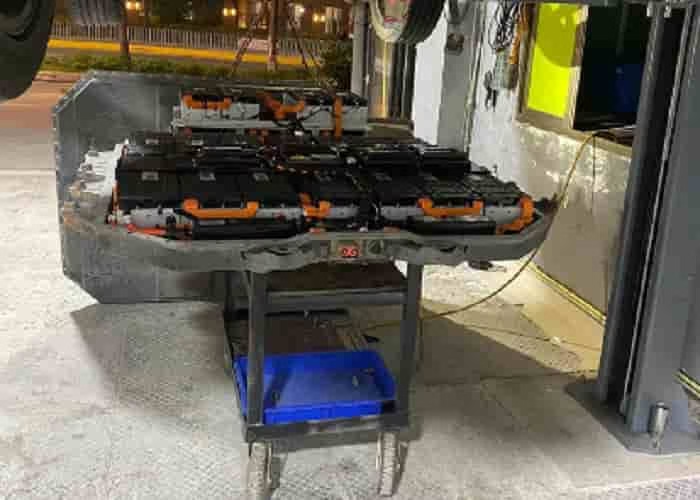
What happens when half-shafts fail in new energy vehicles? Due to the rapid torque response of electric motors and the substantial weight of battery packs, new energy vehicles subject half-shafts to higher impact loads, potentially increasing failure rates slightly compared to traditional fuel vehicles. Frequent rapid acceleration subjects half-shafts to instantaneous high torque, while heavy loads or underbody impacts can directly cause bending.


Leave a Reply