


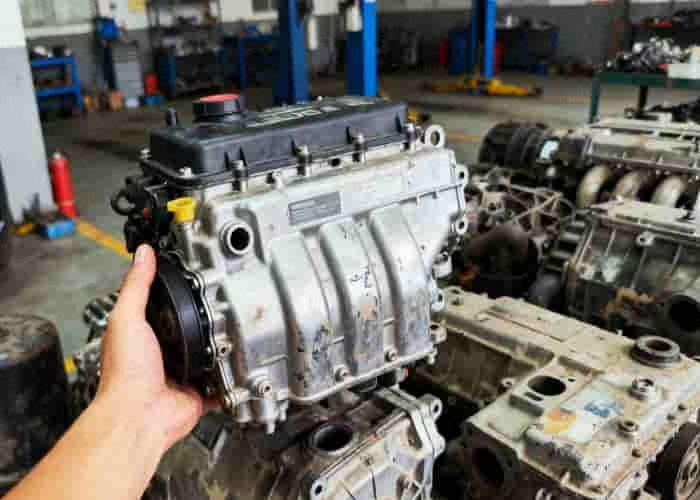
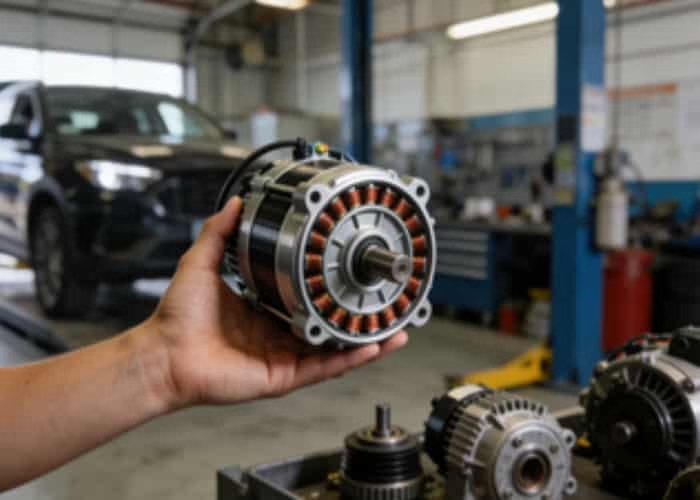
How does the Li-Ideal range extender balance power and energy consumption? The core of its power-energy equilibrium lies in its unique series hybrid architecture and intelligent energy management strategy. The division of labor between the engine and electric motor achieves flexible power delivery and precise energy consumption control.
At the power delivery level, the range extender consistently uses the electric motor as the direct drive source, while the engine solely serves as a generator. This design allows the vehicle to fully leverage the electric motor’s rapid response and direct torque delivery during acceleration, providing a smooth acceleration experience akin to a pure electric vehicle.
The key to energy consumption control lies in the range extender’s optimized operating logic. The engine is engineered to consistently operate within its most thermally efficient RPM range. The system dynamically adjusts power generation based on battery charge level, vehicle speed, and driving mode: when battery charge is sufficient, the range extender maintains low-power operation or shuts down entirely, minimizing unnecessary energy conversion losses.
During stable conditions like highway cruising, the range extender generates power at an economical RPM, meeting motor demands while preventing overcharging. During low battery states or rapid acceleration, power output increases to ensure sufficient drive power. This “on-demand power supply” strategy significantly enhances energy utilization efficiency.
The intelligent energy management system further enhances this balance. In urban commuting scenarios, the system prioritizes battery power usage, minimizing engine starts. During long-distance highway driving, it preemptively activates the range extender while maintaining battery levels within optimal ranges, preventing energy losses from frequent charge-discharge cycles.
How does the Li Auto range extender balance power and energy consumption? Structural optimization further supports this equilibrium. Lightweight materials and low-friction design minimize internal engine resistance; acoustic insulation technology reduces operational noise and vibration, enhancing ride comfort.



Leave a Reply